
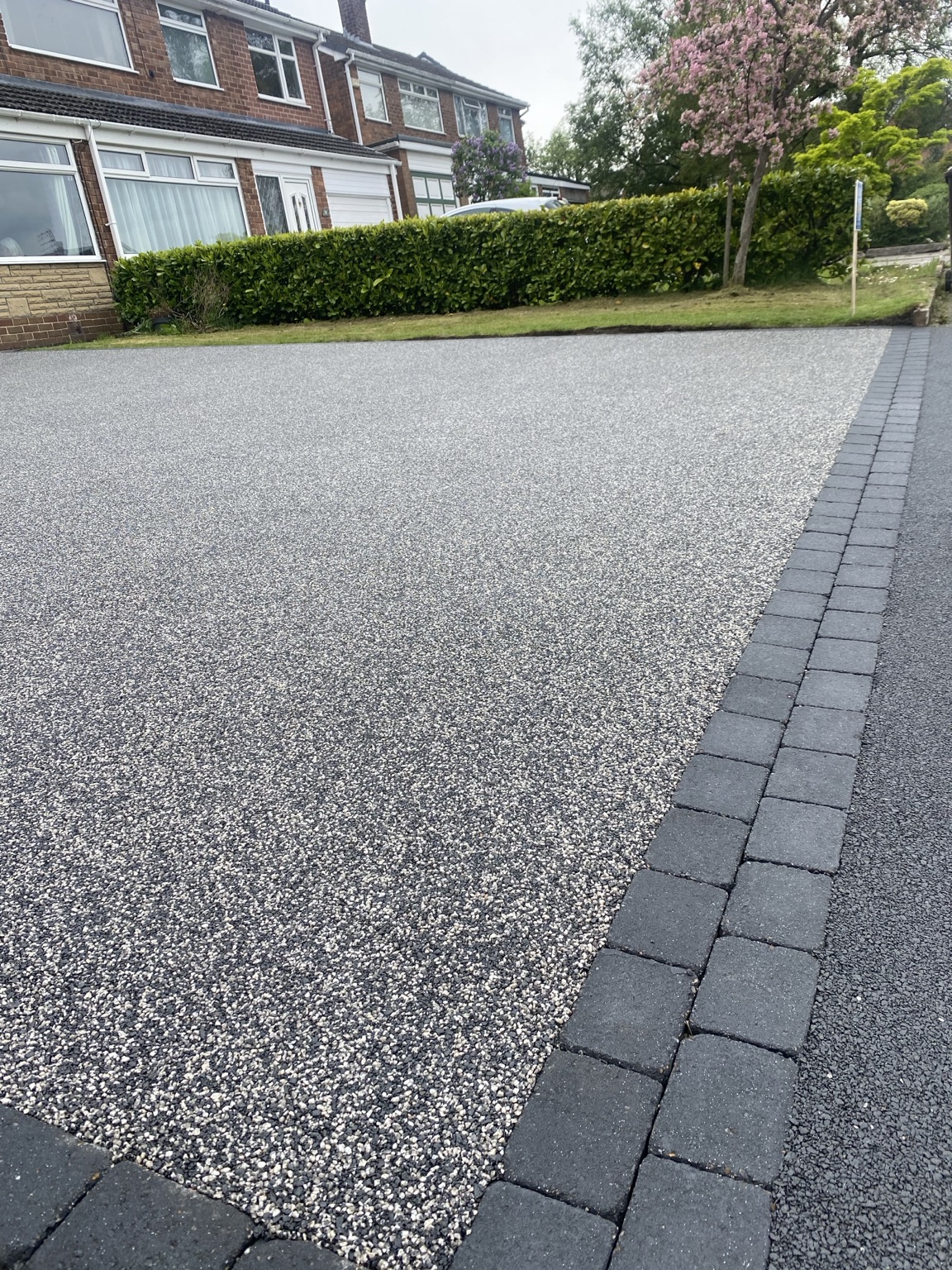
Resin bound vs resin bonded is one of the most important distinctions to understand before choosing a new driveway. The names sound similar, but the materials are applied differently and the finished surfaces behave differently.
Solid Ground specialises in resin-bound driveways, patios and paths. This guide explains the difference in plain language, including appearance, permeability, maintenance and the questions to ask before accepting a quotation.
Resin Bound vs Resin Bonded at a Glance
| Feature | Resin bound | Resin bonded |
|---|---|---|
| How it is made | Resin and dried aggregate are mixed before laying | Resin is spread first and aggregate is scattered over it |
| Finish | Smooth, even and hand-trowelled | Rougher, loose-gravel appearance |
| Loose stone | Minimal when correctly installed | Some excess stone is removed after curing |
| Permeability | The surface can be permeable | Normally non-permeable |
| Typical domestic use | Driveways, paths and patios | Decorative, high-grip surfacing where drainage is designed separately |
Derbyshire Specialist Aggregates, manufacturer of DALTEX systems, describes resin bound as aggregate mixed with resin and trowelled to form a smooth, even surface. Resin bonded uses a resin layer with aggregate broadcast onto it, creating a more textured, non-porous finish. Read its technical overview of resin-bound surfacing.
What Is a Resin-Bound Driveway?
For resin-bound surfacing, carefully graded dry aggregates are combined with a two-part resin in a forced-action mixer. The complete mixture is spread over a suitable base and hand-trowelled to the specified depth.
Because every stone is coated and held within the mixture, the finished surface is comparatively smooth and consistent. Small connected spaces remain between the aggregate particles, allowing water to pass through the resin-bound layer.
That does not mean every resin driveway automatically forms a permeable drainage system. The base and sub-base must also be suitable, and the complete design must manage rainfall correctly. An impermeable concrete base, for example, requires a separate drainage strategy.
What Is Resin-Bonded Surfacing?
Resin-bonded surfacing is installed using a scatter-coat method. Resin is applied to a prepared base, and aggregate is broadcast over the tacky layer. Once cured, loose excess stone is removed.
The result has a coarser texture that resembles loose gravel. It can provide a decorative, high-grip surface, but it is not the same system as a smooth resin-bound driveway and is normally non-permeable. Derbyshire Specialist Aggregates provides a separate resin-bonding explanation.
Which Is Better for a Domestic Driveway?
For many domestic driveway projects, resin bound is chosen because it offers a smooth finish, a wide selection of natural-stone blends and the potential to form part of a permeable system. It can also continue into connected paths and patios for a coordinated design.
The correct choice still depends on the property, intended traffic, existing base, drainage and required appearance. The important point is that the quotation names the actual system. A contractor should not use “resin” as a vague term without explaining whether the proposal is bound or bonded.
Permeability and Planning Rules
In England, Planning Portal guidance says a new or replacement front driveway generally does not need planning permission when it uses permeable surfacing or directs rainwater to a lawn or border. Traditional impermeable surfacing covering more than five square metres may require permission if it does not drain to a permeable area.
Other restrictions can apply to flats, listed buildings, altered access, dropped kerbs or locations with restricted permitted-development rights. Check the official Planning Portal front-garden guidance and contact the local planning authority when necessary.
The Base Still Determines Performance
A resin surface should not be treated as a way to hide a weak driveway. Movement, cracking, contamination, unsuitable joints or trapped moisture below the resin can affect the finished installation.
Before quoting, the installer should assess vehicle loading, levels, drainage, cracks and the construction underneath. Read our forthcoming guide to the best base for a resin driveway for a detailed comparison of permeable no-fines concrete, open-grade asphalt and existing bases.
Questions to Ask a Resin Driveway Installer
- Is the proposed system resin bound or resin bonded?
- What condition is the existing base in?
- Is a full excavation or overlay being proposed?
- How will rainwater drain from the finished area?
- Which resin and aggregate system will be used?
- How will edges, movement joints and existing cracks be handled?
- What preparation, base and waste removal are included?
Related Resin Driveway Guides
Compare current prepared-base, overlay and full-installation figures in our Manchester resin driveway cost guide for 2026.
Read what makes a suitable resin driveway base and learn why resin driveways fail before comparing quotations or deciding whether an existing surface can be overlaid.
Choose a Resin-Bound Design
Use the Solid Ground resin driveway visualiser to compare colour families and borders. You can then send a photograph of your property for a personalised design visual before arranging a site visit.
For a full installation assessment, explore our resin driveway service or contact Solid Ground for a free written quotation.