
Can resin be laid over concrete, tarmac or block paving? It can sometimes be installed over sound concrete or tarmac after a proper inspection and preparation, but resin-bound surfacing should not normally be laid directly over block paving, flags, loose gravel or MOT Type 1.
The condition, stability, drainage and finished levels matter more than the name of the existing surface. Solid Ground assesses every driveway individually before recommending an overlay or complete excavation. If you are actively considering this option, see our resin driveway overlay service for project examples and an assessment request.
Which Existing Driveway Surfaces Can Receive Resin?
| Existing surface | Can resin be laid over it? | What must be checked? |
|---|---|---|
| Concrete | Sometimes | Strength, cracks, movement, moisture, drainage, joints and levels |
| Tarmac or asphalt | Often possible when sound | Stability, contamination, deformation, drainage and edge restraint |
| Block paving | Not normally as a direct base | Individual blocks and joints can move and reflect through the resin |
| MOT Type 1 | No, not directly | A suitable continuous base is required above the compacted sub-base |
| Loose gravel, soil or sand | No | These do not provide a stable continuous laying surface |
Derbyshire Specialist Aggregates, the manufacturer of DALTEX resin-bound systems, lists tarmac, asphalt and concrete as possible bases while warning against paving products such as block paving, setts and flags. Its resin-bound base guidance also stresses that the base must suit the expected load.
Can Resin Be Laid Over Concrete?
A sound concrete driveway can sometimes be retained, but concrete is normally impermeable. The survey must assess cracking, movement joints, contamination, moisture, falls, door thresholds and where rainwater will go.
Cracks cannot simply be hidden beneath resin and forgotten. If the concrete continues to move, defects may reflect through the finished surface. New concrete also needs adequate curing and suitable moisture conditions before resin installation.
DALTEX’s concrete base-course guidance explains that concrete is non-permeable and requires additional drainage for a compliant overall design.
Can Resin Be Laid Over Tarmac?
Existing tarmac or asphalt may form a suitable resin base when it is strong, stable and properly bonded. It should not be badly cracked, soft, contaminated, crumbling at the edges or distorted by vehicle loads.
The inspection must also establish whether the existing construction is permeable. An open-grade tarmac base can support a permeable system; conventional impermeable surfacing requires a designed drainage route. DALTEX provides a separate open-grade tarmac base specification.
Can Resin Be Laid Directly Over Block Paving?
Solid Ground would not normally use block paving as the direct structural base for a vehicle driveway. Blocks are individual units with many joints, and the sand-bedded construction can move independently under traffic. Those joints and movements can eventually become visible as cracking in the resin above.
Block paving may need to be removed before a new sub-base and continuous resin base are installed. The existing excavation can only be retained where inspection confirms that the lower construction, levels and drainage are suitable.
Why Resin Cannot Be Laid Directly on MOT Type 1
MOT Type 1 is a compacted granular sub-base, not a suitable finished laying base for a standard resin-bound driveway. Resin requires a strong, stable and continuous base such as an appropriately designed no-fines concrete or open-grade bituminous construction.
Our detailed guide explains what makes a suitable resin driveway base and why the complete build-up must be designed for the property.
Real 85m² Resin Overlay in Hyde
This genuine Solid Ground project in Hyde is an 85m² overlay system finished in the Eclipse resin blend. The existing patterned driveway was assessed for suitability before the overlay was recommended.
The project shows why an overlay is a property-specific decision. Retaining an existing surface is only appropriate after its stability, cracks, levels, drainage and edge details have been checked. Where the existing construction is unsuitable, excavation and a new base are the safer option.
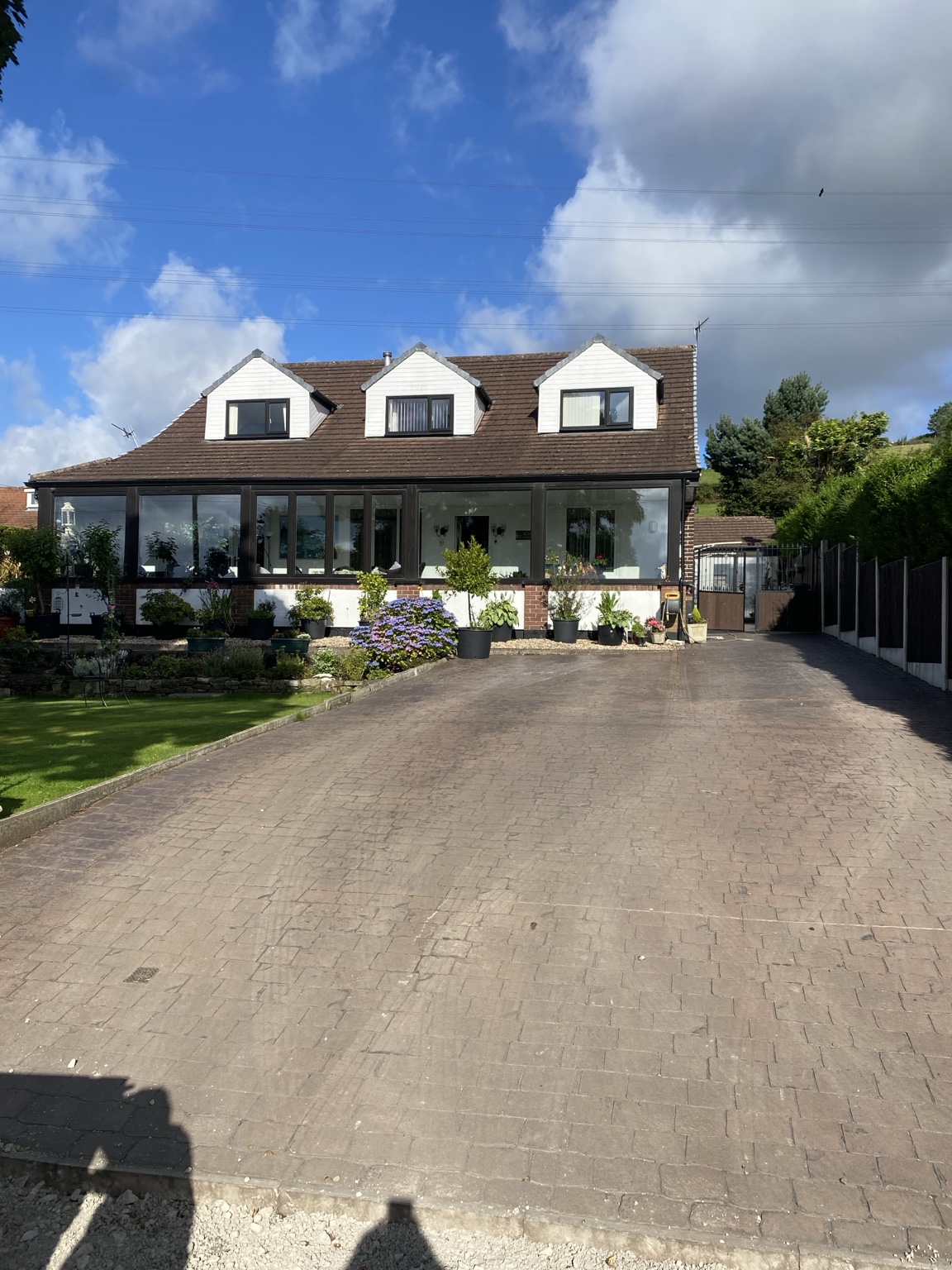
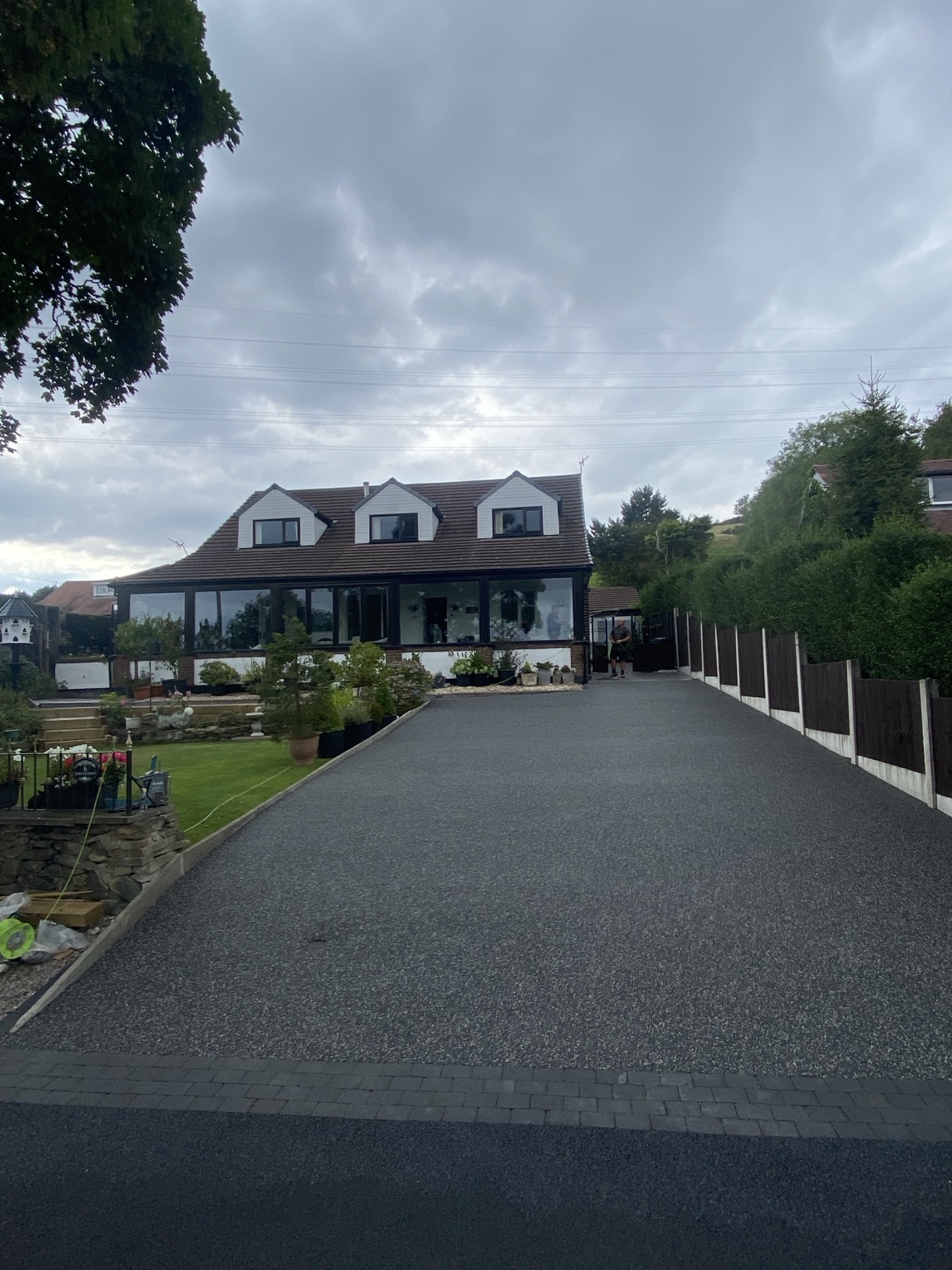
| Location | Hyde |
|---|---|
| Area | Approximately 85m² |
| System | Resin overlay |
| Resin blend | Eclipse |
What Solid Ground Checks Before Recommending an Overlay
- Cracks, movement, settlement and damaged edges
- Whether the surface is concrete, tarmac or another material
- Existing thickness and construction where this can be established
- Oil, algae, coatings and other contamination
- Moisture and curing condition
- Falls, thresholds and connection to the pavement
- Rainwater route and drainage requirements
- Edge restraints, inspection covers and connected paths
DALTEX’s surface-preparation checklist emphasises that an existing surface must be properly prepared and completely dry before resin is installed.
Overlay or Full Excavation: Which Costs More?
An approved prepared-base installation is normally less expensive than a complete excavation because it avoids some plant, disposal, sub-base and base-construction costs. An overlay should not be recommended simply to reach a cheaper price, however. Retaining an unsuitable base transfers the risk into the finished driveway.
See our Manchester resin driveway cost guide for current prepared-base, overlay and full-installation budgeting ranges.
Frequently Asked Questions
Can cracked concrete be covered with resin?
Minor isolated defects may sometimes be prepared as part of a designed installation, but significant or continuing movement makes an overlay risky. The cause and extent of the cracking must be assessed first.
Will resin stop an existing driveway from moving?
No. Resin is a decorative wearing surface, not a structural repair for a failing base. Movement beneath it can lead to cracking or separation.
Is an overlay always cheaper?
It normally reduces excavation and rebuilding costs when the existing base is genuinely suitable. Preparation, drainage, edging, access and design can still affect the final price.
If your existing surface is pattern imprinted concrete, also read our resin driveways vs pattern imprinted concrete comparison before deciding whether to retain or replace it.
If you are comparing an overlay with replacing the driveway in another material, use our resin driveways vs tarmac vs block paving guide to compare appearance, maintenance, drainage and repairs.
Ask Solid Ground to Assess Your Existing Driveway
Send us photographs for an initial opinion or arrange a free site visit across Manchester, Tameside, Hyde, Stockport and surrounding areas. We will explain whether an overlay appears appropriate or whether rebuilding the base offers the safer long-term specification.