
Resin-bound surfacing can be permeable, but the resin surface is only one part of the drainage system. Whether a complete driveway allows water to drain through effectively depends on the base, sub-base, ground conditions, levels and how surface water is managed.
This guide explains what homeowners should understand before assuming that every resin driveway is automatically a fully permeable driveway.
How Does Water Pass Through Resin-Bound Surfacing?
With resin-bound surfacing, aggregate is mixed with resin before being laid and hand-trowelled. The finished structure contains interconnected voids between the coated stones, allowing water to pass through the surface when the system is correctly specified and installed.
Resin Bound Is Not the Same as Resin Bonded
Resin-bound and resin-bonded are different systems. Resin-bound aggregate is mixed with resin before installation. A resin-bonded finish uses aggregate applied onto a resin layer and should not be assumed to provide the same permeability.
Read our full resin bound vs resin bonded guide.
The Base Underneath Matters
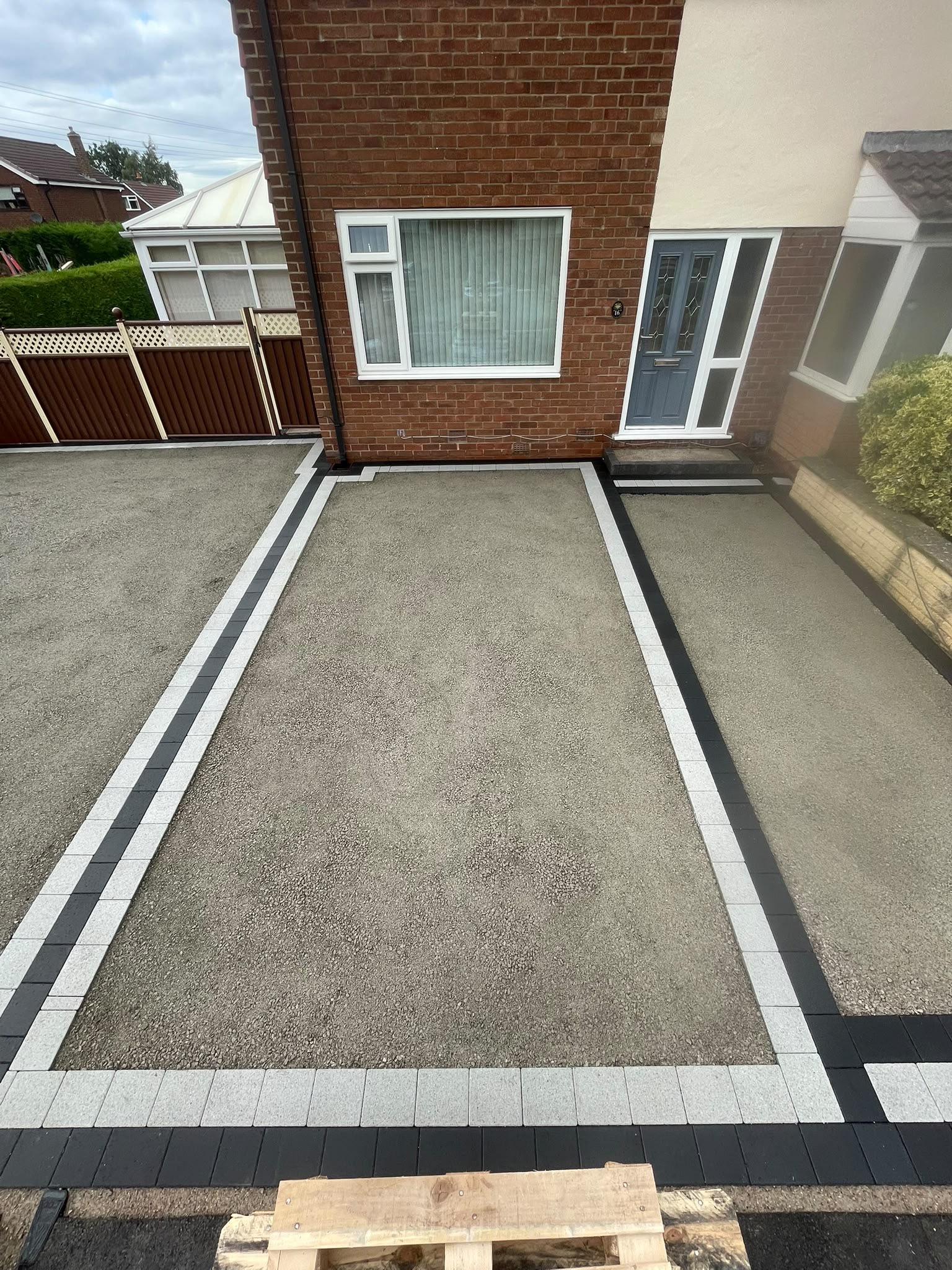
A permeable surface cannot make an unsuitable impermeable construction beneath it disappear. For a genuinely permeable build-up, each layer has to be considered as part of the drainage design.
Depending on the site and specification, this can involve an open-graded sub-base and a suitable resin-ready permeable base. Solid Ground commonly assesses excavation, sub-base construction, no-fines concrete, falls, drainage and edge details as part of a full resin installation.
See what is the best base for a resin driveway?
What Is No-Fines Concrete?
For a dedicated explanation of this base system, see what is no-fines concrete and why is it used under resin driveways?
No-fines concrete uses coarse aggregate with cement paste while omitting the fine aggregate used in conventional dense concrete. The resulting void structure can allow water to move through the base, making it useful in appropriately designed permeable resin installations.
The correct specification still depends on the site, loading and complete pavement construction.
What If Resin Is Laid Over Existing Concrete?
Conventional concrete is generally impermeable. If a sound existing concrete base is being considered for an overlay, drainage cannot simply be ignored because the resin surface itself can pass water.
The installer needs to assess the existing slab, falls, cracks, levels, thresholds and how water will be managed. Read our resin overlay suitability guide.
Do Resin Driveways Need Drainage Channels?
Not every driveway has the same drainage requirement. Channels, falls, permeable construction or other drainage measures may be appropriate depending on the existing site and where water can safely discharge. The drainage arrangement should be considered before the finished resin is installed.
What Causes Standing Water?
Puddles can be associated with several different issues, including unsuitable levels, local depressions, blocked drainage routes, an impermeable construction beneath the surface or changes in the supporting layers. The cause should be identified before deciding on a repair.
For related problems, read why resin driveways fail.
Planning Considerations for Front Driveways
In England, planning rules for paving front gardens distinguish between permeable solutions and impermeable surfaces where water is not directed to a suitable permeable area. Site-specific restrictions can also apply, so homeowners should check the requirements for their property rather than relying on the resin finish alone.
See our resin driveway planning permission guide for more detail.
Resin Driveway Installation Across Greater Manchester
Solid Ground Driveways Ltd installs resin-bound driveways and patios across Hyde, Tameside, Stockport, Manchester and surrounding areas. We consider the existing ground, base construction, levels and drainage before recommending the installation method.
Explore our resin driveway installation process, view genuine local projects, or request a free quotation.