
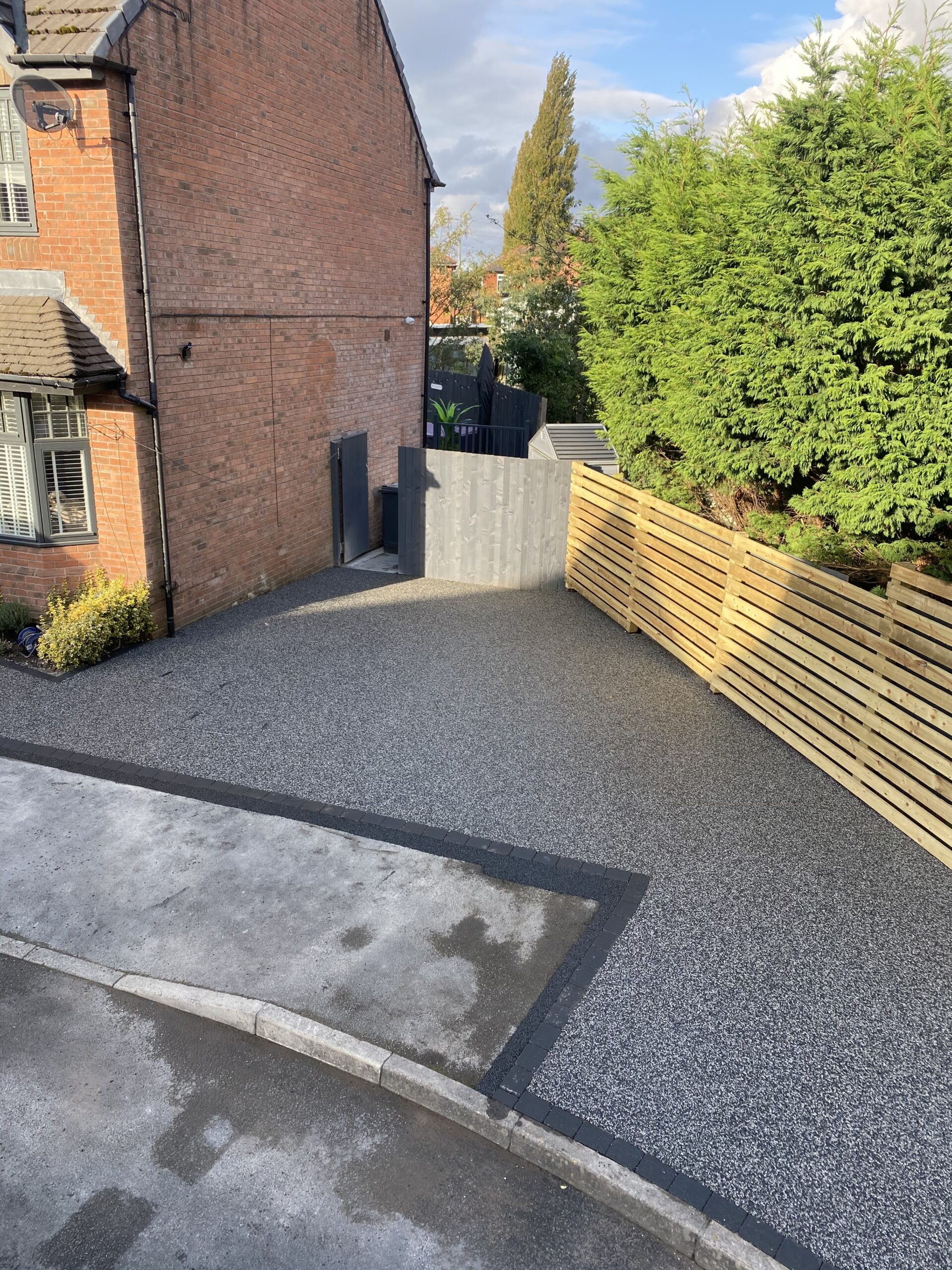
Resin driveway thickness should be specified for the aggregate system, base and intended use rather than chosen as an isolated number. The resin-bound layer is a wearing course: its performance also depends on the construction supporting it.
Why Resin Thickness Matters
A consistent laying depth helps the mixed aggregate and resin form an even finished surface. Installing too thinly can reduce the robustness of the wearing course, while simply making the resin deeper does not repair a weak or moving base.
What Determines the Specification?
The aggregate grading, resin system, manufacturer guidance, expected vehicle use and base all influence the installation specification. Domestic driveways, pedestrian paths and other applications should not automatically be treated identically.
The Base Still Does the Structural Work
Resin-bound surfacing should be installed onto a stable continuous base suitable for the expected load. Read our resin driveway base guide and our guide to no-fines concrete.
Consistent Mixing and Hand Trowelling
Correct batching, thorough mixing and controlled hand-trowelling help keep the finished layer consistent. The installation team must work methodically across the area rather than relying on the resin surface to disguise variations underneath.
What Should a Homeowner Ask?
Ask which resin-bound system is being installed, what base it is going onto, how the proposed depth has been selected and whether the complete construction is suitable for vehicle traffic. A quotation should describe more than the colour of the aggregate.
See our installation process, failure guide and Resin Driveway Advice Centre.